Everyday Tech, Automation & AI Learning Lab for Hospitals
Hands-on guidance for practical use of technology, automation, and AI in everyday hospital work
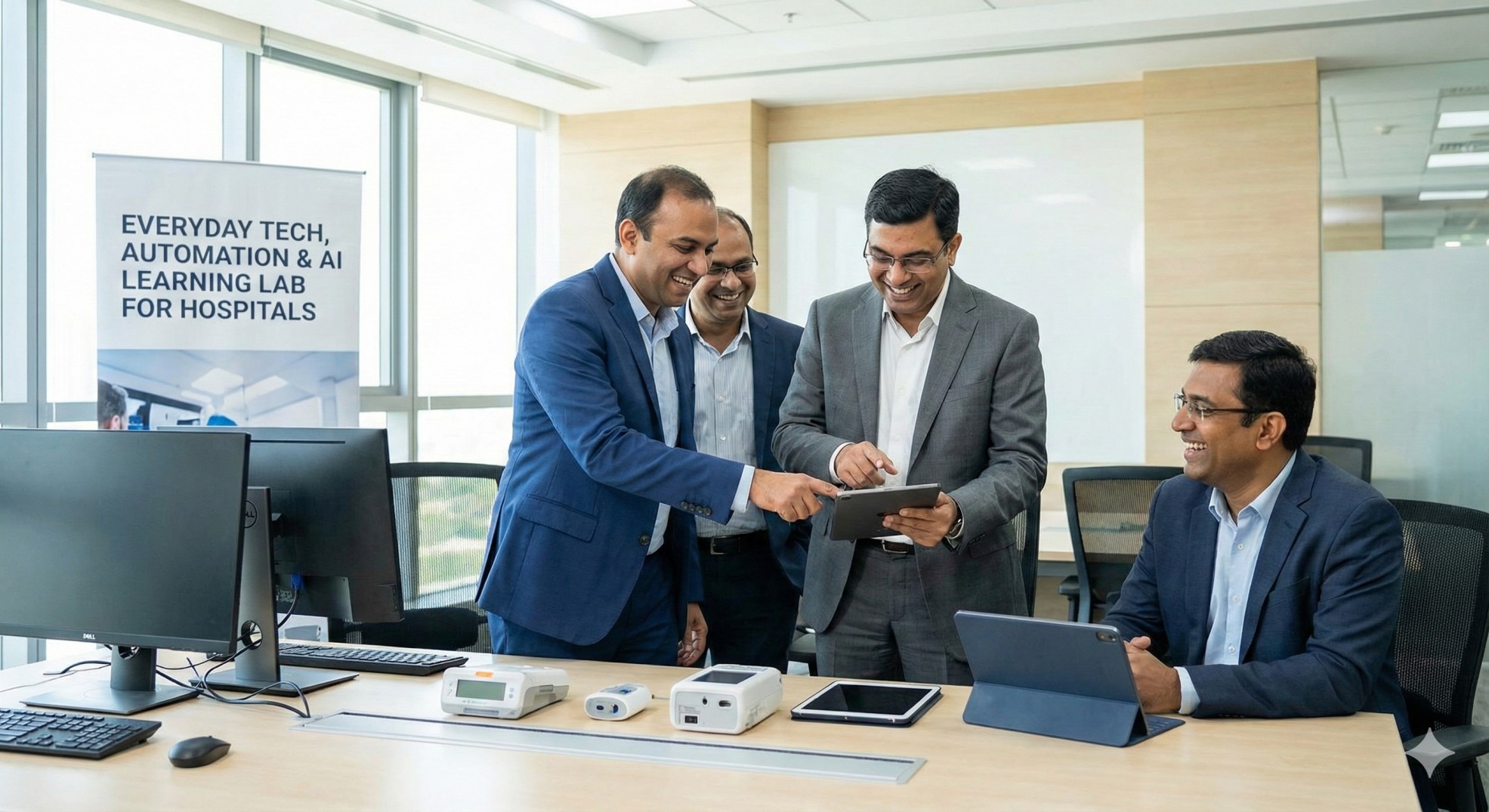
Why We Are Creating This Learning Lab
In most hospitals, work still depends on people managing things manually.
- Nurses complete notes after long shifts.
- Admin teams track work across registers, Excel sheets, and WhatsApp messages.
- Billing and insurance teams spend hours on follow-ups.
- Doctors are pulled into coordination and documentation because information doesn't flow cleanly.
This is not because hospitals don't want to improve.
It's because daily operations leave no time to step back and redesign how work is done.
Technology and AI are talked about everywhere, but for most hospitals the real question is simple: "How can I use Tech & AI and does this actually reduce work for my team?"
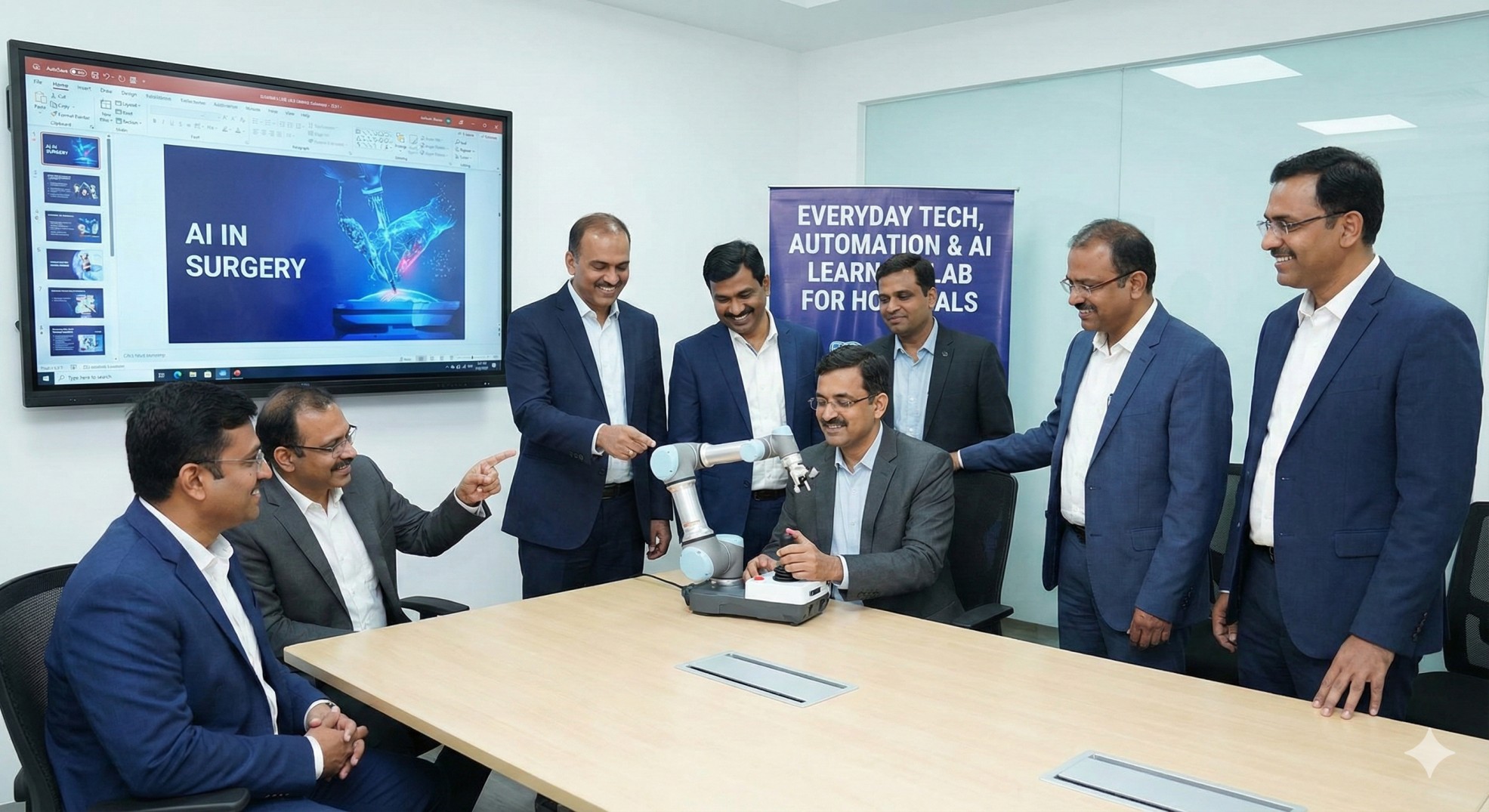
At Navig Health, we are building the Learning Lab to help hospital teams learn the basics of workflows and the practical use of open tools such as ChatGPT, Gemini, and Claude. The focus is on understanding how to write effective prompts and how to use simple automation tools so teams can identify repetitive tasks and streamline them using technology and AI.
The goal is to reduce manual effort, improve efficiency, support better quality of work, and ultimately contribute to better outcomes across hospital operations.
Who This Is For
The Learning Lab is designed for hospital teams.
Hospitals typically involve:
- Nursing leaders and senior nurses
- Operations and administration teams
- Billing, insurance, and discharge teams
- Quality and compliance coordinators
- Doctors involved in operations and oversight
The value is highest when different functions learn together and align on how work should flow across the hospital.
What This Learning Lab Focuses On
This is not about introducing new software or selling tools.
The focus is on everyday hospital operations:
- Nursing and ward-level work
- Hospital administration and coordination
- Billing, insurance, and discharge processes
- Quality, safety, and compliance documentation
The intent is simple:
- Reduce unnecessary manual work
- Improve clarity and handovers
- Help teams work better together
- Use technology only where it genuinely helps
What "Hands-on Guidance" Means For Hospital Teams
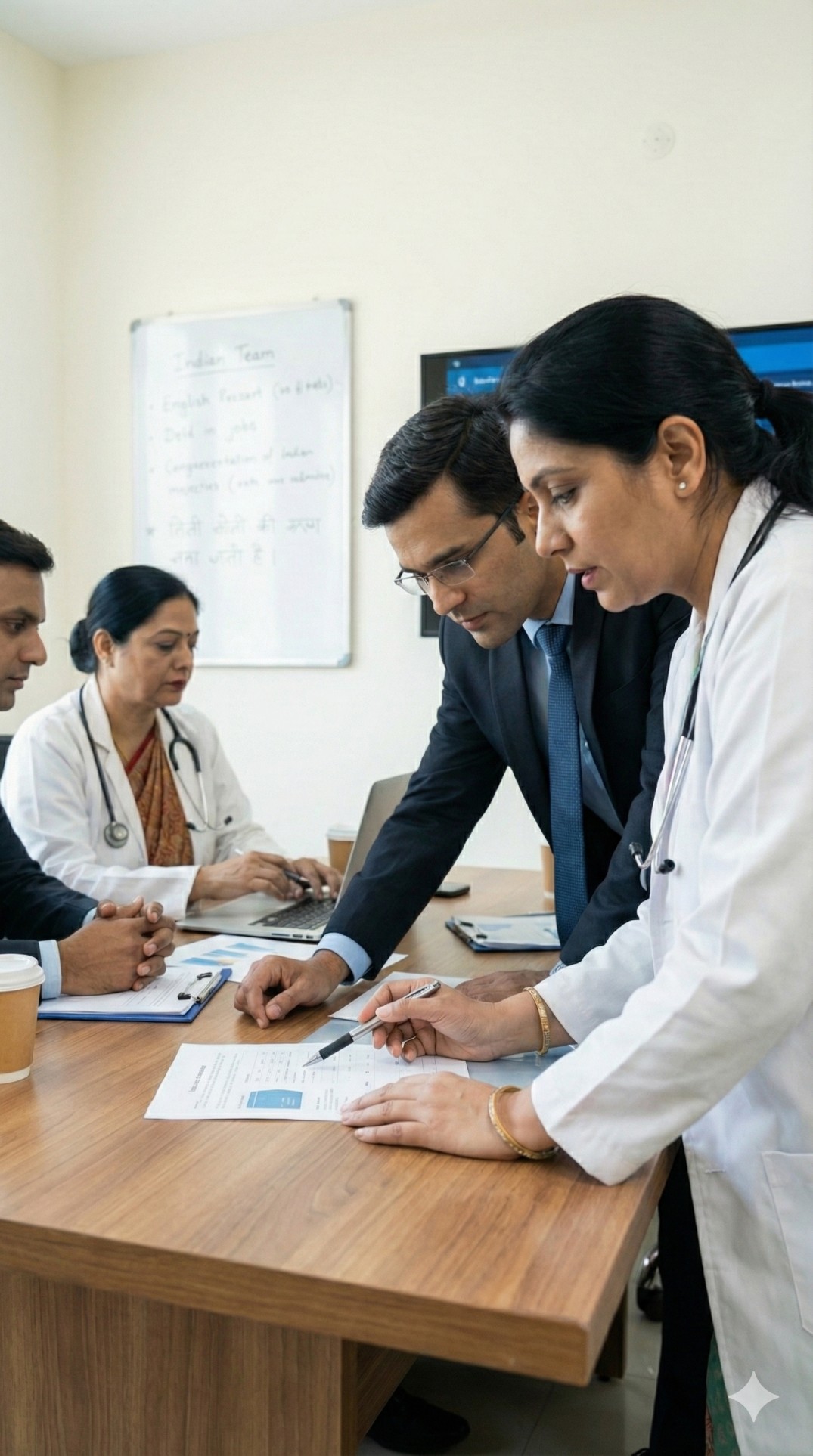
Hands-on does not mean theory, frameworks, or generic demos.
It means working through situations hospitals recognise immediately:
- Shift handovers that depend on memory or rushed notes
- Documentation that has to be rewritten multiple times
- Discharge processes that feel hurried and error-prone
- Incident reporting delayed because it takes too much effort
- Coordination gaps between nursing, admin, billing, and doctors
Sessions focus on practical questions:
- Where is the effort being duplicated?
- What information can be entered once and reused?
- What should be automated, and what must stay human?
- How can small changes reduce daily friction?
The emphasis is on practical, everyday use cases that are directly applicable to different functions in a hospital setting.
Where Doctors Fit In
Doctors are not expected to become tech users or data-entry operators.
Their role in the Learning Lab is focused on:
- Reducing time spent on non-clinical coordination
- Structuring clinical inputs so downstream work becomes smoother
- Improving discharge oversight without increasing workload
- Supporting nursing and operations teams with clearer clinical intent
When clinical inputs are clearer, a large amount of downstream confusion and rework disappears.
How the Learning Lab Works
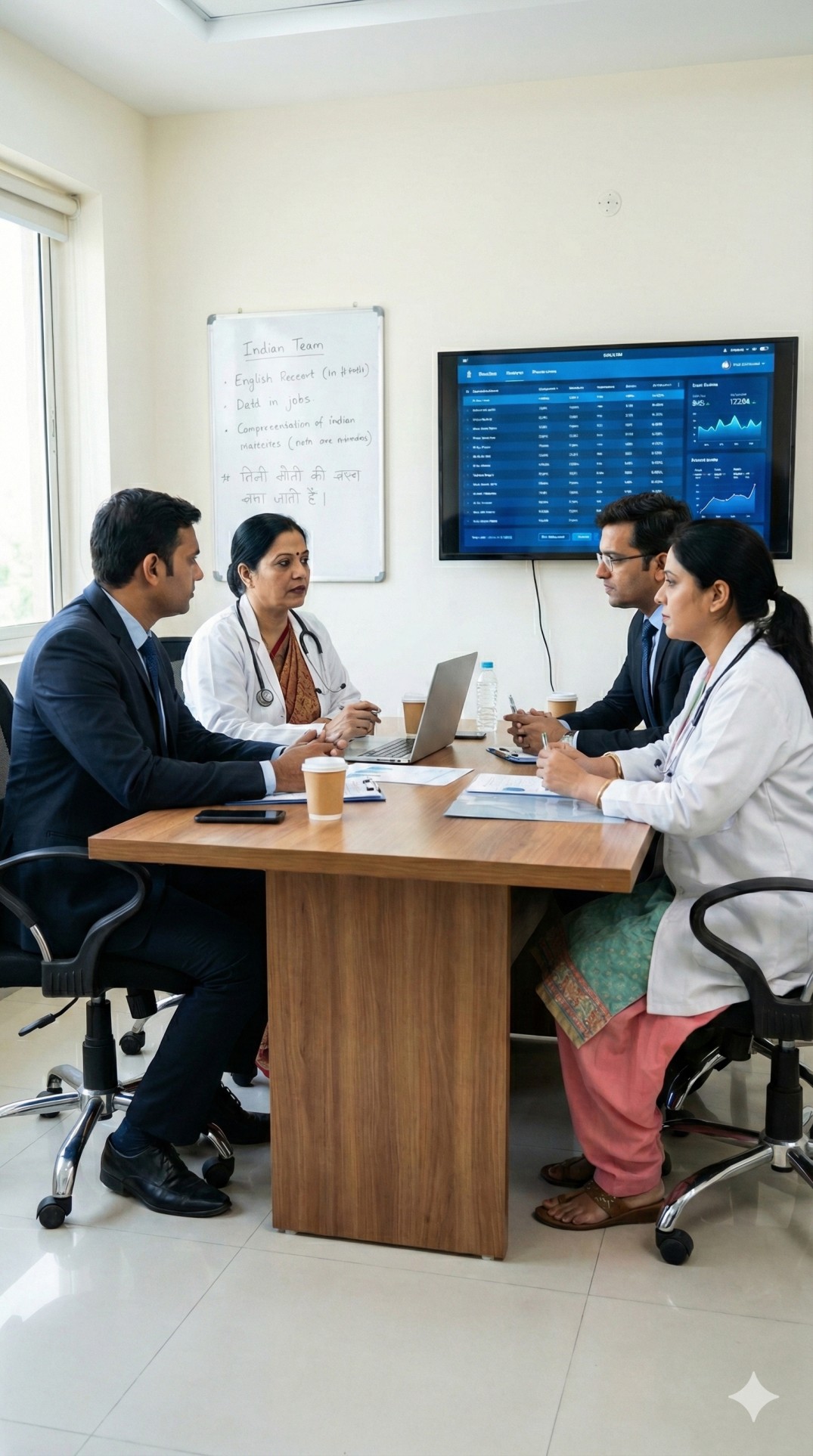
The Learning Lab is designed to fit into the reality of hospital work. It does not require teams to step away for long periods or commit to heavy programmes upfront. Learning happens in small, practical blocks and builds over time.
Bi-Weekly Online Webinars
Regular learning sessions form the backbone of the initiative. These are conducted as bi-weekly, theme-based sessions, each focused on a specific area of hospital operations.
Topics are chosen based on common challenges seen across hospitals - nursing documentation, shift handovers, discharge coordination, billing and insurance workflows, quality reporting, and cross-team coordination.
Each session looks at:
- How the work is typically done today
- Where time and effort are being lost
- What can realistically be improved using simple technology, automation, or AI
- What should remain manual and human-led
Sessions are example-driven, using real hospital scenarios rather than idealised processes. The intent is to help teams recognise familiar problems and see practical ways to reduce effort without introducing risk.
Quarterly Offline Workshops
Alongside these sessions, the Learning Lab plans to run quarterly on-ground workshops in different cities. These are deeper, in-person sessions where teams from multiple hospitals come together for a full day or two. The focus here is not on presentations, but on working through real processes.
During these workshops, hospital teams:
- Map how work actually happens across roles
- Identify bottlenecks, handover gaps, and duplication
- Discuss what has already been tried and what has failed
- Outline small, workable changes that fit their setting
The workshops are designed to help hospitals move from learning to application - without forcing large changes or new systems all at once.
Hospital Teams can engage with the Learning Lab in different ways - by attending sessions regularly, joining workshops when relevant, or participating around specific topics that matter most to them.
What Hospitals Take Away from The Learning Lab
The Learning Lab is designed to help hospitals take advantage of the technology, automation, and AI tools that are easily available today and can be learned with relatively little effort. It helps hospital teams overcome the initial hesitation and uncertainty around using AI by making things simple and practical.
The idea is to train and equip internal hospital teams to build their own workflows and confidently start using readily available tools in their day-to-day work.
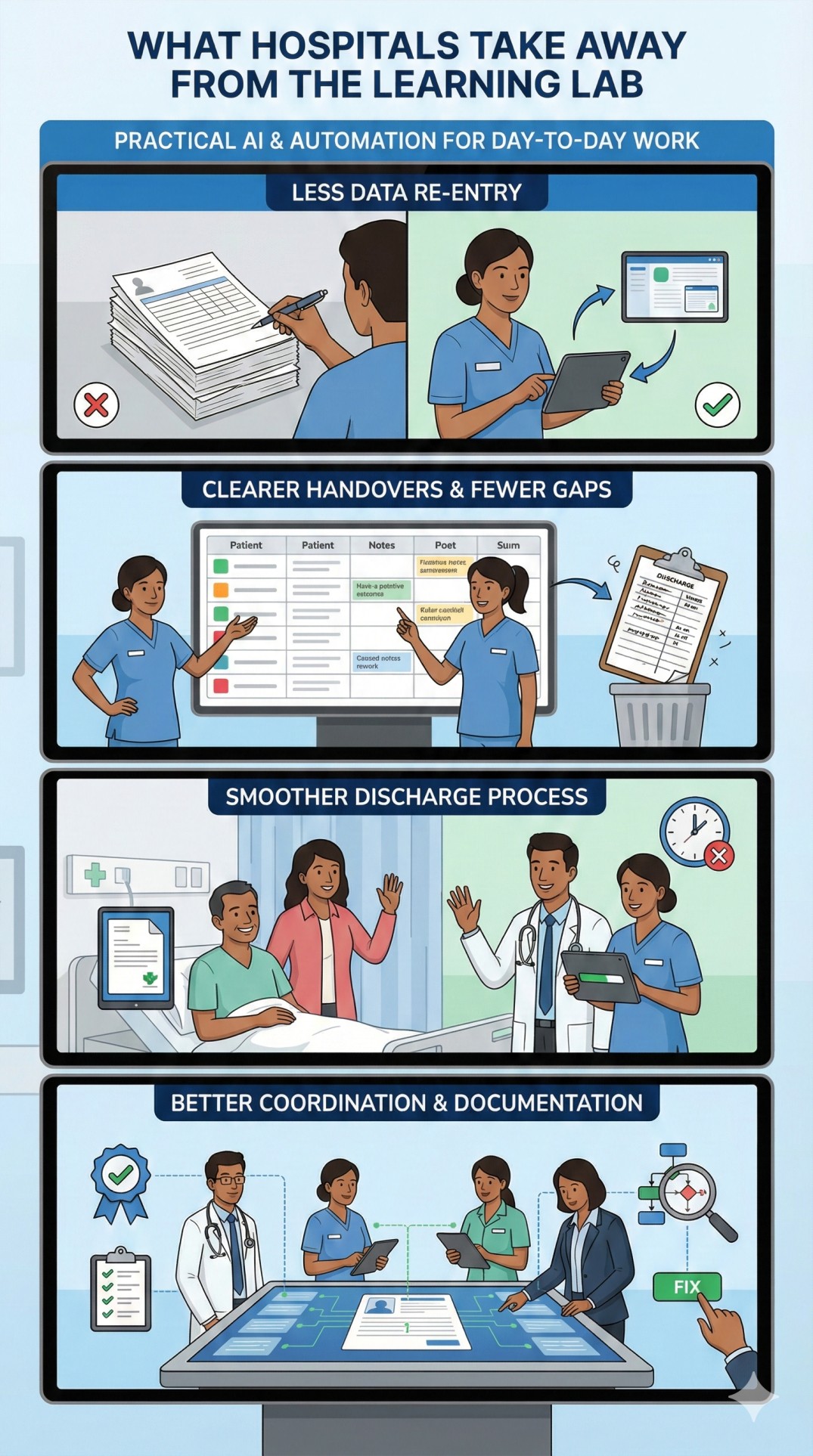
Over time, hospitals typically experience:
- Less repeated writing and re-entry of the same information
- Clearer shift handovers and fewer communication gaps
- Smoother discharge processes with fewer last-minute issues
- Better coordination between nursing, admin, billing, and doctors
- More consistent documentation for quality and compliance
Teams become better at spotting where work is breaking down and more confident in fixing small problems before they grow.
Hospitals build internal skills and capabilities. Teams begin to understand what technology can help with, what it cannot, and how to evaluate new tools without fear or dependency. This reduces frustration, lowers resistance to change, and makes improvement feel manageable rather than overwhelming.
Interested in Participating in Our Learning Lab?
If you are a hospital owner, part of the management team, or a member of any hospital function, and you want to learn the first steps in using technology, automation, and AI to improve day-to-day operations and processes, this Learning Lab is for you.
You can start by joining a session, attending a workshop, or simply learning alongside peers who are dealing with similar challenges.
Ready to Join the
Navig Community?
Whether you're a hospital looking for technology support, a clinician interested in innovation, or a tech team wanting clinical validation - we'd like to hear from you.
Share a bit about yourself and we'll reach out.