Fractional CIO / CTO for Small & Mid-Sized Hospitals
Corporate-Level Technology Leadership. Without Corporate-Level Cost.

The Challenge
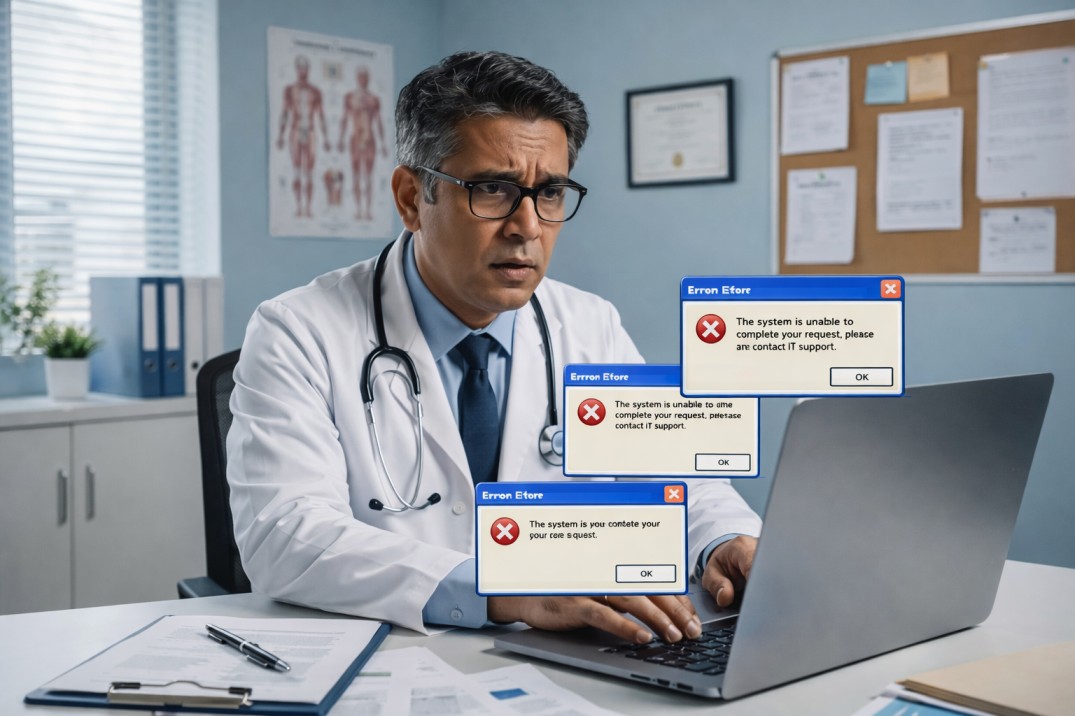
Most 50–200 bed hospitals in India don't have a CIO. They have software, vendors, and data — but no one owning the outcomes.
Corporate hospital chains have in-house tech teams, dedicated CIOs, data analysts, and structured IT governance. Small and mid-sized hospitals are expected to match that standard — implement HIMS correctly, manage insurance workflows, reduce revenue leakage, track dashboards, train staff continuously, and integrate AI tools — all without the leadership layer that makes it possible.
A full-time CIO costs ₹20–50 lakhs a year at a minimum, plus the cost of a supporting tech team. For a 100-bed hospital, that's hard to justify.
Navig's Fractional CIO model changes that equation. We become your technology and digital transformation partner — accountable for implementation, adoption, optimization, and measurable outcomes.
Not just advisory. Not just vendor coordination. We take ownership.
Our 3 Core Offerings
1. Software Implementation & Accountability
Buying software is easy. Using it properly across the hospital is not.
Most hospitals face 30–40% feature underutilization after installing HIMS or other tools. Usage stays inconsistent across departments. Staff resistance builds. Turnover breaks continuity. Vendors blame users, users blame vendors, and management is stuck in the middle without a clear owner.
We step in as the accountable layer between your management, your staff, and your technology vendors. Our responsibility is straightforward — the software must be used properly across the hospital, every day. We own that outcome.
What we deliver:
- Vendor evaluation and selection support
- HIMS implementation planning with workflow mapping before deployment
- Structured onboarding for every department
- Role-based training modules — OPD, IPD, Billing, Nursing, Insurance, Stores
- Retraining protocols when staff attrition happens
- SOP documentation and usage protocols
- Monthly adoption audits
- Ongoing vendor coordination and escalation
We don't just install software. We ensure it works — and keeps working.
2. Management Dashboard & Hospital Intelligence Layer
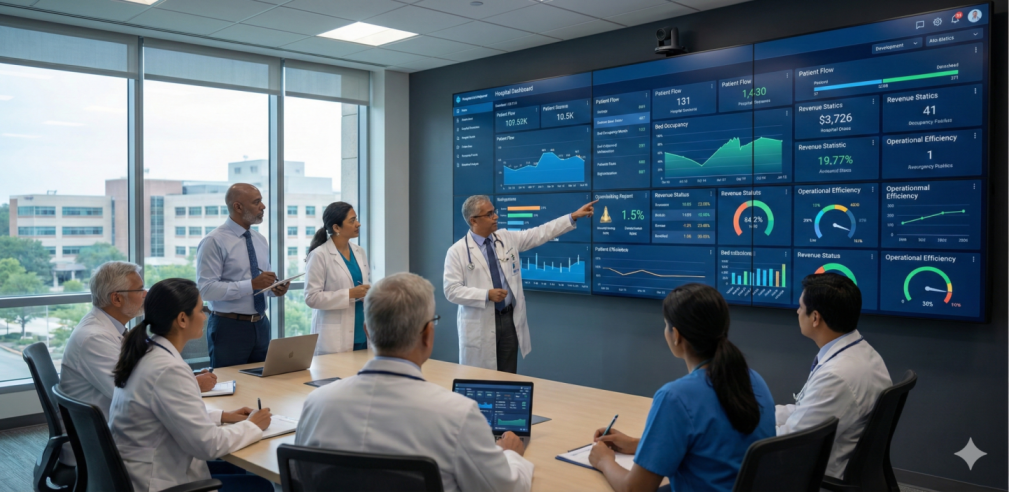
Most hospitals have data. Very few have insights.
HIMS stores information. But management meetings still run on partial numbers, delayed reports, and manual Excel sheets. The data exists — it's just trapped inside systems that weren't designed to surface decisions.
We create a dashboard layer on top of your existing systems by integrating HIMS data, billing and collections, insurance claims, inventory systems, and CRM or lead data where available. Your leadership team gets structured, hospital-specific intelligence — not generic BI.
What management sees:
- OPD → IP conversion rates
- OPD → Diagnostics and Pharmacy revenue
- Average revenue per patient
- Doctor-wise productivity
- Bed occupancy trends
- Discharge turnaround time
- Insurance claim cycle time
- Revenue leakage indicators
- Department-wise profitability
- Cost tracking and variance
What management gets beyond dashboards:
- Weekly dashboard reviews
- Monthly executive summaries
- Action recommendations with corrective measures
Technology should drive decisions — not just store data.
3. Revenue Growth & Cost Optimization Modules
Across multiple hospitals, we see the same patterns repeat — revenue that could have been captured is lost, processes create avoidable inefficiencies, and manual systems leave gaps. We've systematized these into structured, ROI-driven modules.
A. Revenue Growth
Process improvements built into hospital workflows — not marketing gimmicks.
- OPD → IP conversion optimization
- OPD → Diagnostics and Pharmacy cross-linking
- Discharge efficiency improvement
- Doctor referral pathway tracking
- CRM-driven repeat patient activation
- Insurance documentation automation
- Billing error detection
B. Revenue Leakage Reduction
Leakage often happens silently — missed charges, incorrect coding, documentation gaps, insurance rejections.
- Missed charge audits
- Package mismatch detection
- Pharmacy & Diagnostics Internal Leakage
- Length of Stay & Bed Utilization Leakage
- Discharge reconciliation tools
- Automated claim documentation checklists
C. Cost Optimization
Cost control isn't about cutting corners — it's about visibility and discipline.
- Inventory forecasting and slow-moving stock alerts
- Procurement standardization
- OT utilization tracking
- Staffing optimization analytics
- Consumable wastage monitoring
- AMC and vendor contract tracking
D. Custom AI & Workflow Projects
Built only after understanding your real workflows on the ground.
- AI-assisted discharge documentation
- Insurance claim pre-validation
- Predictive occupancy planning
- Patient engagement automation
- NABH documentation digitization
- Cross-department workflow automation
No generic AI hype. Practical hospital impact.
How the Engagement Works
We follow a structured approach that moves from assessment to execution.
Diagnostic Assessment
We assess your current digital maturity, revenue leakage areas, workflow gaps, cost optimization opportunities, and vendor performance.
6–12 Month Technology Roadmap
We prioritize initiatives based on ROI, feasibility, and hospital capacity — with clear budget planning, vendor alignment, and expected outcomes.
Implementation & Governance
We coordinate vendors, train teams, build dashboards, and review progress with structured monthly reviews and adoption tracking.
You don't just get recommendations. You get structured execution.
Who Is This For?
- 50–200 bed hospitals looking for structured technology governance
- Growing specialty hospitals scaling operations
- Doctor-owned hospitals wanting better operational control
- Hospitals struggling with HIMS adoption and staff training
- Hospitals planning expansion or preparing for investment and M&A
If you need corporate-level tech governance without building an in-house IT department, this model is built for you.
The Navig Belief
We believe doctor-led hospitals must remain strong in India.
Technology should not be a luxury available only to corporate chains. With the right governance, dashboards, and structured execution, small and mid-sized hospitals can compete effectively.
That is what our Fractional CIO / CTO model is built to enable.
Ready to Join the
Navig Community?
Whether you're a hospital looking for technology support, a clinician interested in innovation, or a tech team wanting clinical validation - we'd like to hear from you.
Share a bit about yourself and we'll reach out.